July 3rd, 2009
There are two major causes of health problems in rabbits: incorrect diet and lack of exercise.
Exercise is important for:
Bones
Exercise helps build bone density preventing Osteoporosis (weak bones). A lack of exercise increases the risk factors for bone fractures and breaks.
Muscles
Muscle wastage, particularly in the backend, can effect a rabbits ability to hop normally and move around. The heart is also a muscle and exercise help keeps it fit, so reducing the risk of heart attack.
Mental Well Being
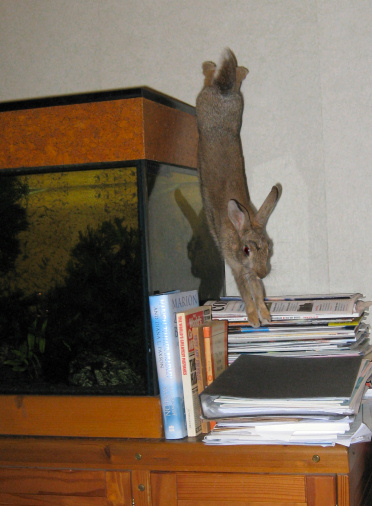
If a rabbit does not have the space to exercise then it does not have the space to exhibit normal behaviour. Rabbits are built to run and hop. This can lead to a whole range of behaviour problems including aggression, over grooming, repetitive bar chewing/cage rattling etc.
It is also a risk factor in many other illnesses including obesity, fly strike, gut issues and sore hocks.
Please give your rabbit room to move. Rabbits should have a run a minimum of 6′x4′ but preferably bigger or access to a larger area regularly so they can run.
Tags: exercise, health, rabbit behaviour
Posted in Uncategorized | No Comments »
May 22nd, 2009
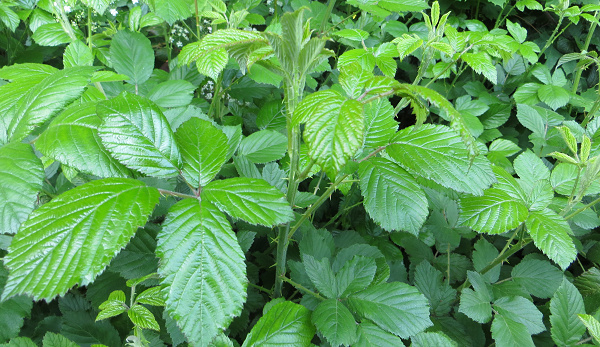
With all the different dry foods, fancy types of hays and treats available for discerning rabbit owner to chose from sometimes the simplest diet options get overlooked. Grass is the most natural of foods for a rabbit to eat and is often readily available at very low (if any) cost.
It is tasty, if you are a rabbit, and will often tempt rabbits who turn their noses up in disgust at hay. It is also high in fibre, great for wearing down teeth and the rabbit digestion system has been perfected to digest it.
So why do many rabbits never get to eat it? Read the rest of this entry »
Tags: diet grass, rabbit diet, rabbit health, rabbit toys, wild rabbit
Posted in Care | No Comments »
May 18th, 2009
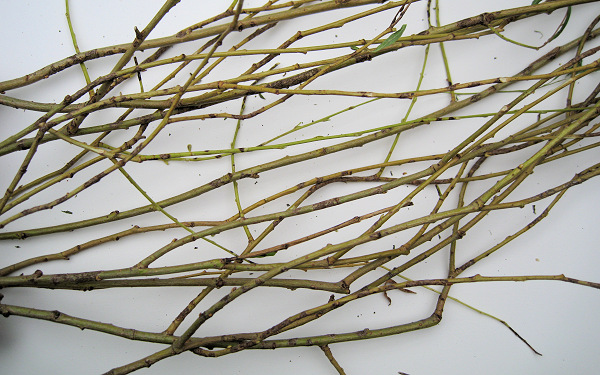
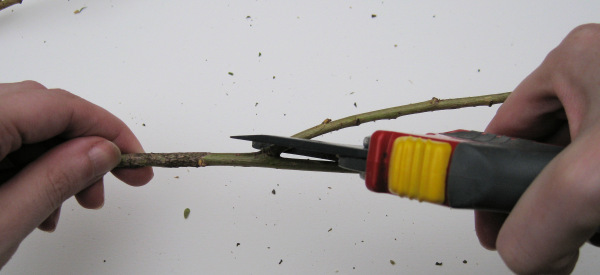
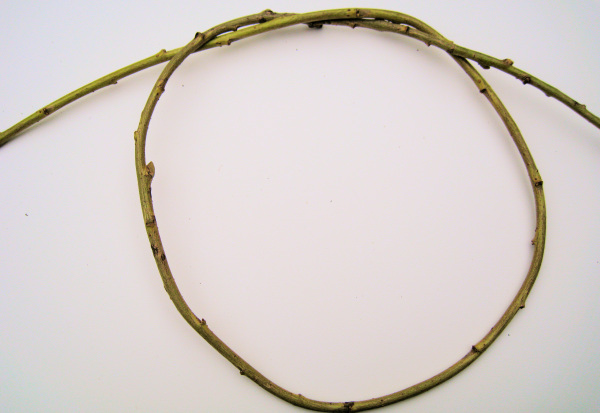
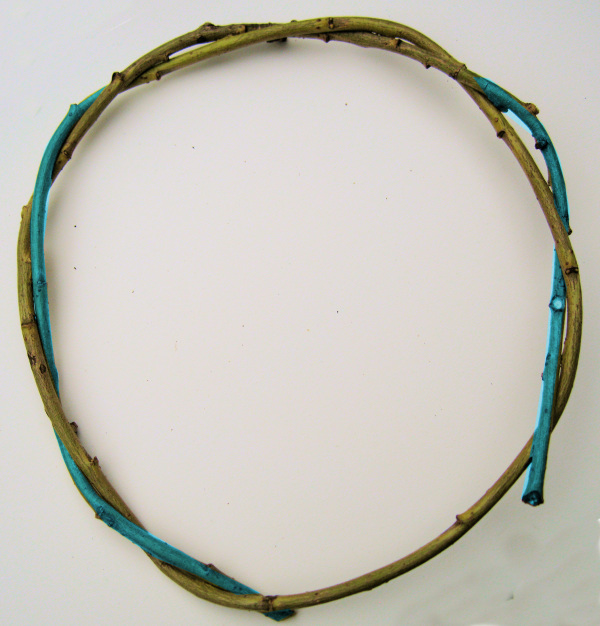
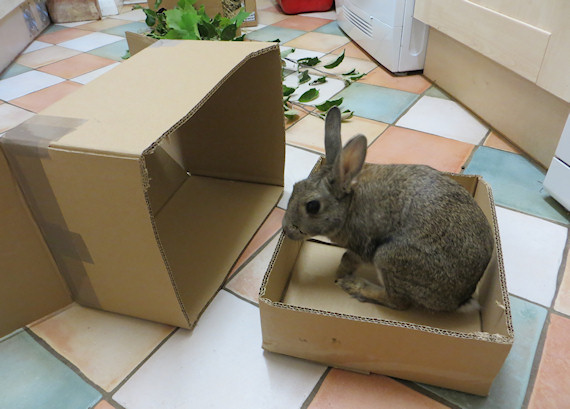
Rabbits love to dig! In the wild they dig burrows to live in and shallow scraps to rest/sunbath in. Anything in their way, eg tree roots, gets gnawed through. That’s great outside but no so good when the ’soil’ they are digging in is your carpet and the ‘tree roots’ are your skirting boards.
You are not likely to come out on top of any attempt to stop your rabbit digging. Digging is what rabbits do. Instead you need to redirect the behaviour to a more appropriate outlet, are here is one solution… Read the rest of this entry »
Tags: behaviour digging, rabbit toys
Posted in Care | No Comments »
November 2nd, 2007
Over the last few years the range of toys available for rabbits has grown enormously. Of all the products available, I think the absolute best is: the treat ball. A treat ball is a hollow ball you fill with dry food/treats that has a small hole. As the rabbit pushes the ball around the food gradually falls out the hole. What’s so amazing about this? Rabbit’s are grazing animals and would usually spend hours every day eating. The treat ball helps mimic this by stretching a bowl of food, that would usually be eaten in ten minutes, out in to an hour long activity. It’s great for getting your rabbit more active and preventing boredom, both of which will help your rabbits over all health. Read the rest of this entry »
Tags: rabbit diet, rabbit products, rabbit toys, treat ball
Posted in Product Reviews, Care | 2 Comments »
June 27th, 2007
The Bristol Rabbit Clinic are running a campaign to ensure rabbit owners recognise the symptoms of fly Strike. Fly Strike occurs when flies lay their eggs on a rabbit’s skin and the eggs hatch out in to maggots which burrow under the skin. Without prompt veterinary treatment fly strike is fatal.
You can minimise the risk of fly strike by reducing the flies around your rabbit, making sure your rabbit isn’t attractive to flies and checking your rabbit over regularly.
Fly Control
Basic hygiene and fly control will help protect your rabbit against fly strike. To minimise flies near your rabbit you should:
- Clean out litter trays/toilet corners daily.
- Hang non-toxic (no poison) sticky fly papers out of reach of your rabbit.
- Place rabbit (and house hold) waste in sealed bins, away from the rabbit’s area, and clean bins regularly with disinfectant.
- Fly screens/netting can be placed over windows or the front of your rabbits hutch.
- Remove uneaten fresh food
Rabbits at High Risk
Some rabbits are at a higher risk of fly strike than others. The following are high risk factors:
- Rabbits with mobility problems, arthritis or rabbits that are over weight. Rabbits in this category can have difficulty cleaning themselves which can attract flies.
- Rabbits that get sticky poops (excess cecotropes) stuck to their fur. This makes rabbits very attractive to flies. It can be improved by changes to the diet including encouraging your rabbit to eat more hay.
- Rabbits with long fur. This can make cleaning more difficult and provide warm damp areas attractive to flies.
- Rabbits with injuries. Open wounds are very attractive to flies. You should check your rabbit regularly for wounds and take extra precautions.
- Rabbits with damp fur. Damp fur is very attractive to flies. You should not bath your rabbit. Also be wary of rabbits with teeth issues that may dribble.
If your rabbit falls in to a high risk group your vet may recommend treating it with a maggot development inhibitor such as Rear Guard made by Novartis Animal Health. This is applied to your rabbits fur and is designed to prevent maggots developing to the dangerous stage in their life cycle.
Checking Your Rabbit
Maggots develop rapidly so rabbits should be checked twice a day to detect fly strike quickly so it can be treated. Fly eggs are small white/cream/yellow and shaped like a grain of rice. Maggots are short stubby looking worms coloured between white and yellow. You should particularly check the area around your rabbits tail and between its legs.
If you find your rabbit has fly strike call the vet immediately. Do not try washing them off your rabbit, as damp fur can make the removal harder for the vet. You can start removing the eggs/maggots with teasers on the way to the vet.
Your vet will shave the area and remove the maggots under the skin then treat the rabbit with fluids (for shock), painkillers and antibiotics to prevent infection.
Tags: fly strike, rabbit health
Posted in Health | 1 Comment »
June 20th, 2007
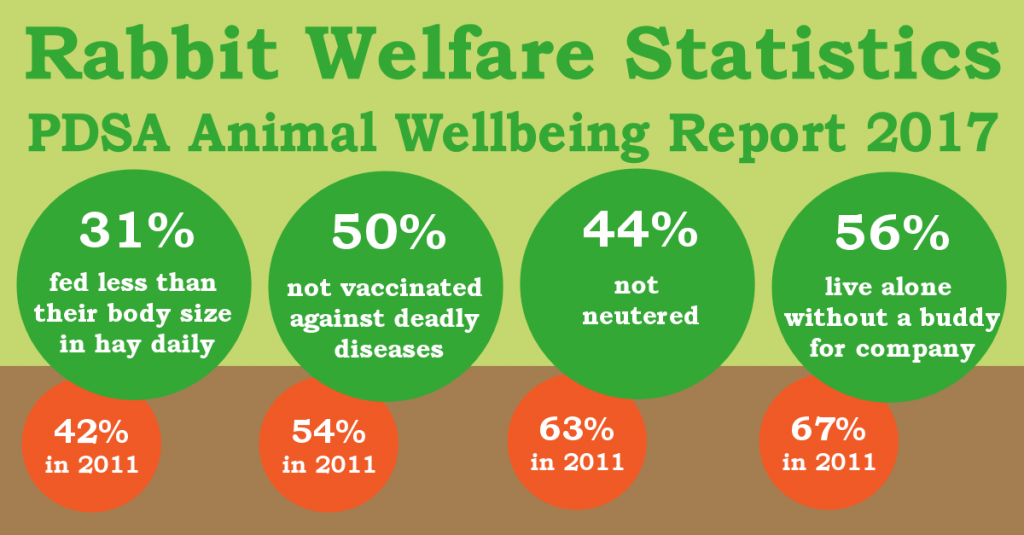
Considering at least 80% of a rabbit’s diet should be hay (or grass) there is a worrying number of rabbits owners that report their bunny eats little or no hay. The high fibre content of hay is essential for maintaining a healthy gut and teeth, as well as providing a boredom busting activity for your rabbit.
Many common and potentially serious health problems are caused or exacerbated by the lack it of, including:
- Gut Stasis
- Excess Cecotropes (sticky poop) which can lead to fly strike
- Overgrown teeth which can result in tooth abscesses and gut stasis
So, below are my top 5 tips for turning your rabbit in to a hay eater.
Read the rest of this entry »
Tags: cecotropes, gut stasis, hay, rabbit diet, rabbit health, teeth
Posted in Care | 5 Comments »
June 19th, 2007
Are you planning a trip this summer? If so, do you have your rabbit’s holiday care arranged?
You have two options:
1. Get someone to visit your bunny at your home.
Pros: You rabbit stays in a familar environment minimising stress
Cons: Finding someone willing to check your rabbit twice a day for signs of illness and to make sure they have water and hay can be difficult. Ideally this should be done by someone familiar with rabbits so they can spot abnormal behaviour that may indicate your rabbit is unwell. A neighbour or friend may be convenient but unless you’re very lucky they may not know much about rabbits.
2. Book your bunny in to a holiday boarding facility.
Pros: A experienced and professional facility should take good care of your bunny.
Cons: Finding such a facility can be difficult. Some rabbits may find moving accommodation stressful.
More advice on choosing rabbit holiday boarding facilities.
Which ever option you choose you should quiz your rabbits careers carefully to make sure they understand your rabbits needs. Give a detailed list of what your rabbit can and cannot eat and in what quantities. Leave your vets details and contact details for you or an experienced bunny owning friend in case they have problems.
Tag: holiday boarding
Posted in Care | No Comments »
June 18th, 2007
I picked up a copy of BBC Wildlife today. It features an article by Dr Diana Bell on the territorial behaviour of wild rabbits. Bell has studied a colony of (European) wild rabbits at the University of East Anglia for the past 23 years.
The European Rabbit is the same species as our domestic pets, so understanding their behaviour can provide a helpful incite into the behaviour of our pet bunnies.
For example, Bell describes how male rabbits:
patrol their territory boundaries, scent-marking them with urine and secretions from their chin and anal glands to ensure that their neighbours respect these borders.
Behaviour which I’m sure is very familar to those who have lived with an unneutered buck.
Another interesting part is the social structure within the warren. The males and the females each have a social heirachy (pecking order) which they may fight to maintain. This provides a potential explanation for male-female (neutered) pairs are the most successful match in pet rabbits. Two or more of the same sex rabbits would naturally form a heirachy and if they don’t agree who’s boss that’s when fights can occur.
Tags: rabbit behaviour, wild rabbit
Posted in Care | No Comments »
June 17th, 2007
Flight’s were suspended at Milan’s Linate Airport while 200 volunteers, police and officials rounded up 40 hares for relocation to a wildlife reserve. The Hare population had exploded this year causing danger to flights.
It’s great to see relocation being pursued as a first option instead of the more common ’shoot anything in the way’ approach.
Tag: hare
Posted in News | No Comments »
June 16th, 2007
Change your bookmarks, Rabbits Only Forum has moved to: http://www.rabbitsonline.net and changed to Rabbits Online.
Tag: rabbit websites
Posted in News | No Comments »