Archive for the ‘Care’ Category

New Litter Tray II

Sunday, February 7th, 2010

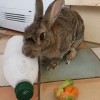
Look what my parents bought for Scamp, a new tray Mark II. It’s slightly taller so the corner is hidden and it had metal reinforcing on part of the edge ;)

scamps litter tray

The new litter tray didn’t last long. I think he’s got into the habit of nibbling now. He gets a little fixated on things sometimes and once he’s made his mind up it can be quite hard to distract him.

Here’s the newly decorated old new tray:

litter tray

New Litter Tray

Tuesday, December 15th, 2009

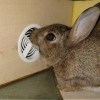
Scamp got a new litter tray today. Unfortunately the customisations he had made to his old one made it a bit impractical as a litter tray. High sided tray with no corners anyone?

old litter tray

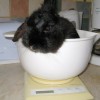
It’s not too bad though, his new washing up bowl.. err litter tray.. was only £1.60 at Tesco.  It is exactly like the old one, except whiter, but he wasn’t entirely convinced.

new litter tray

An application of hay seemed to settle the matter though.

rabbit litter tray

I’ve never been that impressed with pet store litter trays. They seem to underestimate either the height a rabbit can lift its tail or how much extra space is needed for hay/napping. Washing up bowls and storage boxes provide a much better choice of sizes.

Anyone want to place a bet on how many corners will be left by tommorow morning?

Hay v. Staw

Friday, December 11th, 2009

I had an email about the difference between hay and straw earlier this week. It’s a topic that confuses a lot of people.

Hay

Hay is fed to rabbits as a substitute for fresh grass. It is grass that has been cut and left to dry. Good hay should be green and smell sweet, not be dusty or smell musty (excuse the pun). The greener hay is the closer it is nutritionally to grass. Old brown hay will have plenty of fibre but is not so good for providing all the other nutrients a rabbits needs. It’s also less tasty… not that I’ve personally tried it.

There are different types of grass such as Timothy, Meadow and Orchard. Sometimes grass is also grown with legumes like Alfalfa. This increases the protein level which makes it too fattening to feed as the main diet for the average adult rabbit, although it can be good for growing youngsters or putting weight on an older rabbit. Alfalfa is also higher in calcium, again good for growing youngsters but too much can be bad for adults.

rabbit hay

Straw

Straw is the stalks from grain crops after the grain heads have been taken off. It’s yellow and the stalks are hollow like a drinking straw. Straw is great for insulating so it is used for bedding to keep rabbits warm on cold winter nights. Straw has a lower nutritional value than hay so it’s not suitable to feed as a replacement for grass. If you use it for bedding, add some hay on top for your rabbit to snack on. It’s perfectly safe if your rabbit does nibble the straw a bit too though.

rabbit straw

Yellow Pages: The House Rabbits’ Answer to Carpet Chewing

Monday, May 18th, 2009

Rabbits love to dig! In the wild they dig burrows to live in and shallow scraps to rest/sunbath in. Anything in their way, eg tree roots, gets gnawed through. That’s great outside but no so good when the ’soil’ they are digging in is your carpet and the ‘tree roots’ are your skirting boards.

You are not likely to come out on top of any attempt to stop your rabbit digging. Digging is what rabbits do. Instead you need to redirect the behaviour to a more appropriate outlet, are here is one solution… (more…)

Rabbit Holiday Boarding

Tuesday, June 19th, 2007

Are you planning a trip this summer? If so, do you have your rabbit’s holiday care arranged?

You have two options:

1. Get someone to visit your bunny at your home.

Pros: You rabbit stays in a familar environment minimising stress
Cons: Finding someone willing to check your rabbit twice a day for signs of illness and to make sure they have water and hay can be difficult. Ideally this should be done by someone familiar with rabbits so they can spot abnormal behaviour that may indicate your rabbit is unwell. A neighbour or friend may be convenient but unless you’re very lucky they may not know much about rabbits.

2. Book your bunny in to a holiday boarding facility.

Pros: A experienced and professional facility should take good care of your bunny.
Cons: Finding such a facility can be difficult. Some rabbits may find moving accommodation stressful.

More advice on choosing rabbit holiday boarding facilities.

Which ever option you choose you should quiz your rabbits careers carefully to make sure they understand your rabbits needs. Give a detailed list of what your rabbit can and cannot eat and in what quantities. Leave your vets details and contact details for you or an experienced bunny owning friend in case they have problems.